
This post was originally from February 12, 2025
On my last post I left of writing about our visit to the spectacular Prambanan Hindu Temple and this post is a continuation of another jaw dropping day!!!
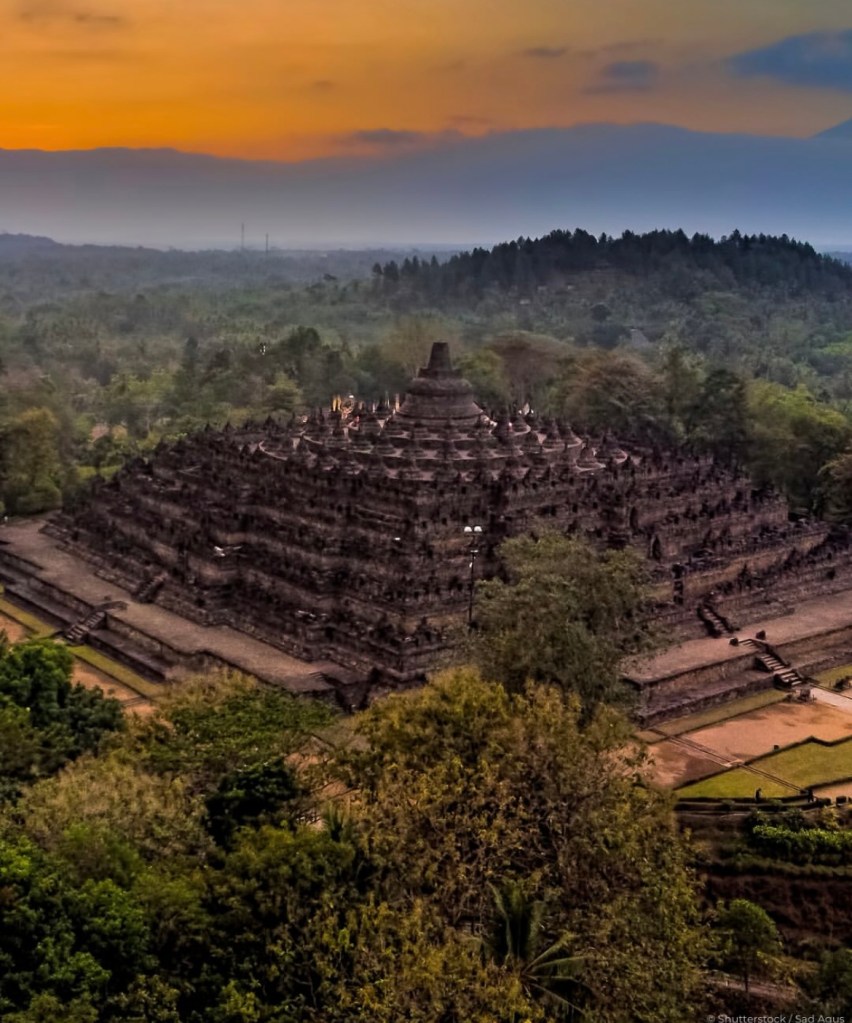
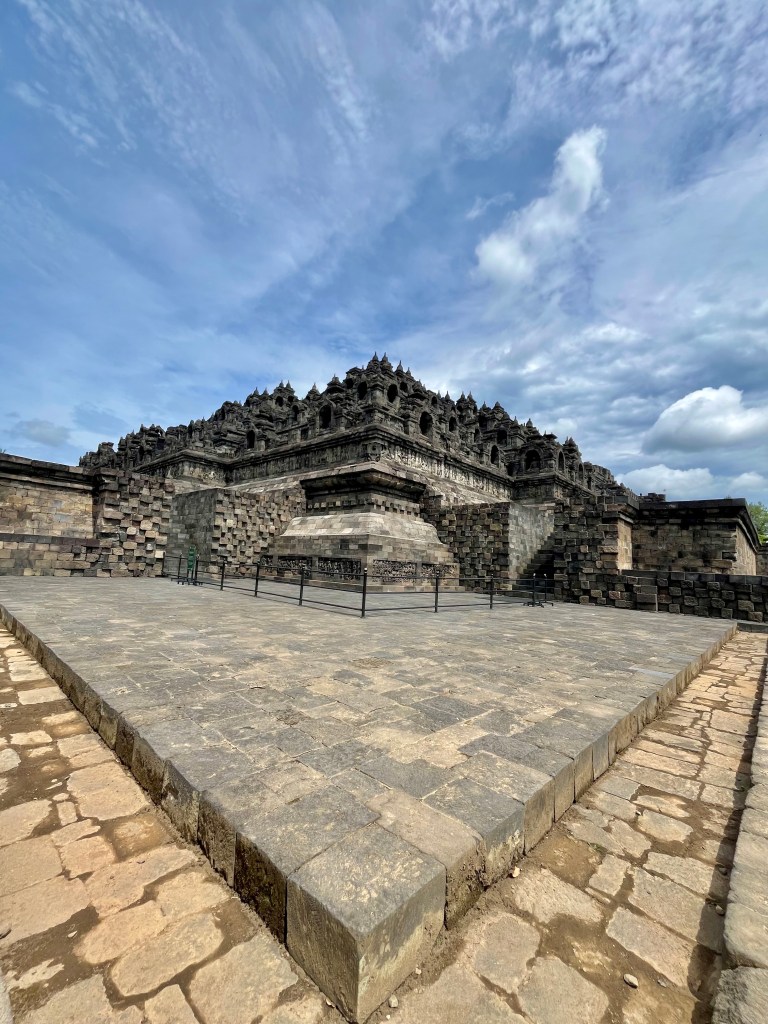
We set off in the morning (about 1 hour drive from Yogyakarta) to visit a UNESCO Heritage Site known as Borobudur Buddhist Temple. It’s the largest Buddhist temple in the world, with Bagan in Myanmar and Angkor Wat in Cambodia following as one of the greatest archaeological sites in Southeast Asia. It was built without using any cement and like Prambanan the structure is a massive set of interlocking blocks.
Borobudur is so special that monks and other devout Buddhist worshippers make pilgrimages across the world to come pray here. Pretty fascinating that two massive temples – one Hindu and the other Buddhist are celebrated in a predominantly Muslim country! It just goes to show you how the Indonesians embrace one another instead of fight. Learning more about the religions that exist here in Indonesia it is interesting that although they follow the Muslim/Hindu/Christian/Buddhist/ Confucianism teachings, they always incorporate the traditional ways of honoring the land and their ancestors by giving offerings to such things as the volcano, river or tree. To me it shows the similarities of how our First Nations people respect the land and ancestors in the same way. It’s so beautiful!
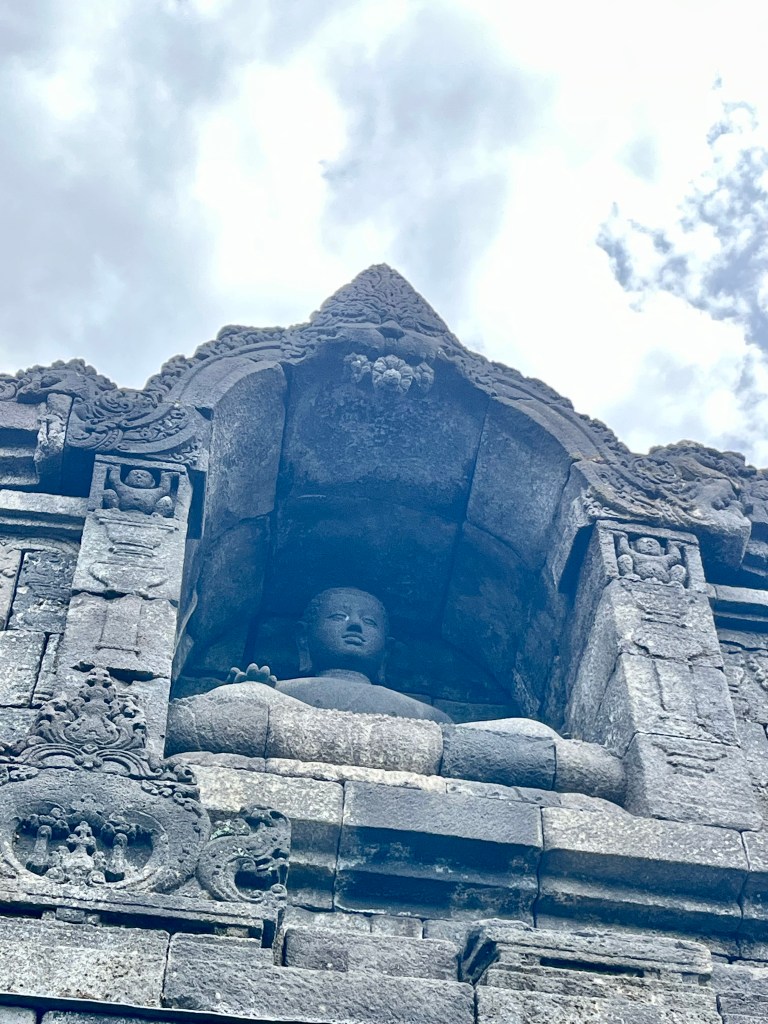
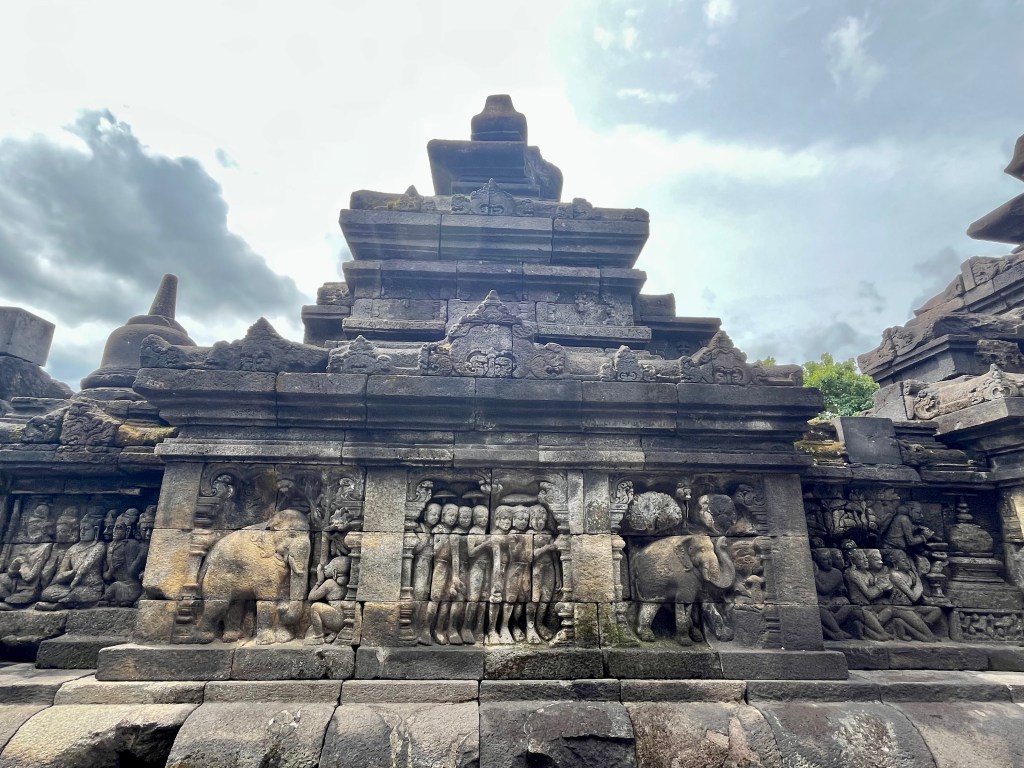
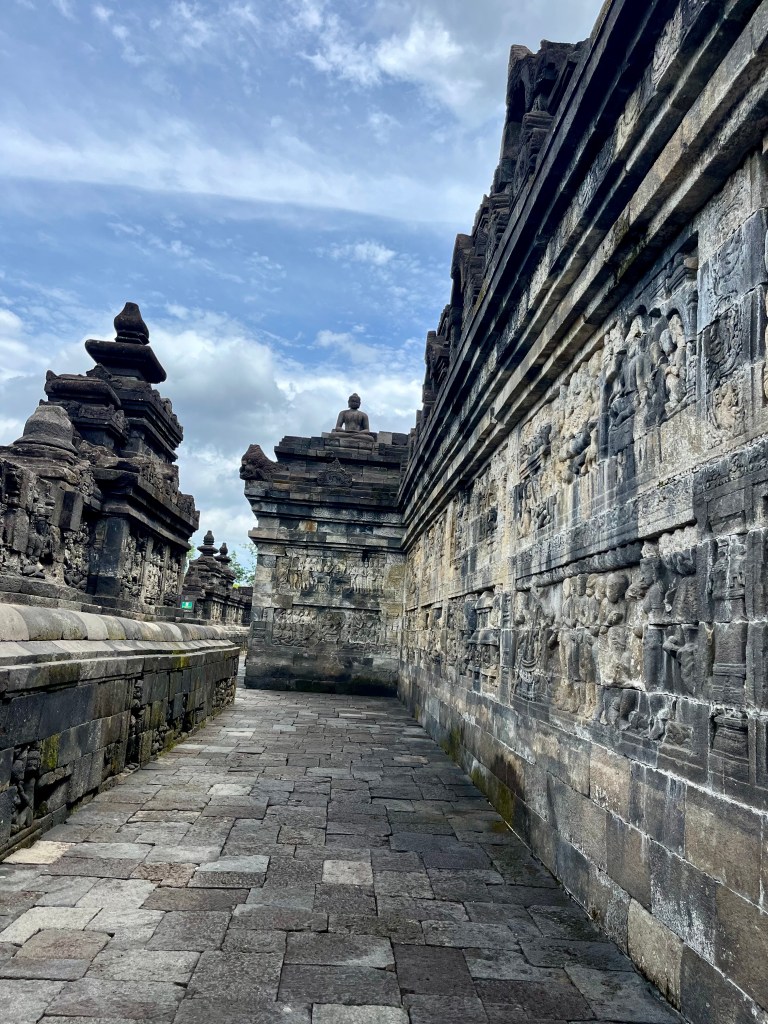
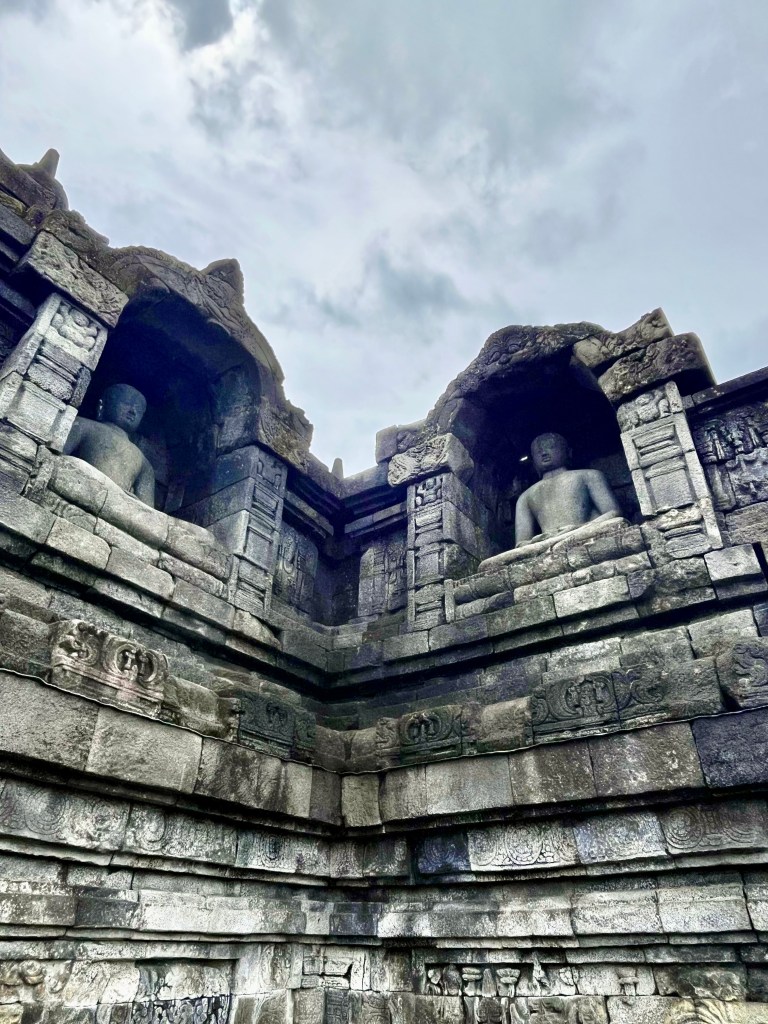
Borobudur was another highlight of this trip that I have been so excited to see. Built in the 8th century, the temple follows the Javanese Buddhist architecture which blends indigenous Indonesian tradition of worshipping ancestors and the Buddhist concept of attaining nirvana.
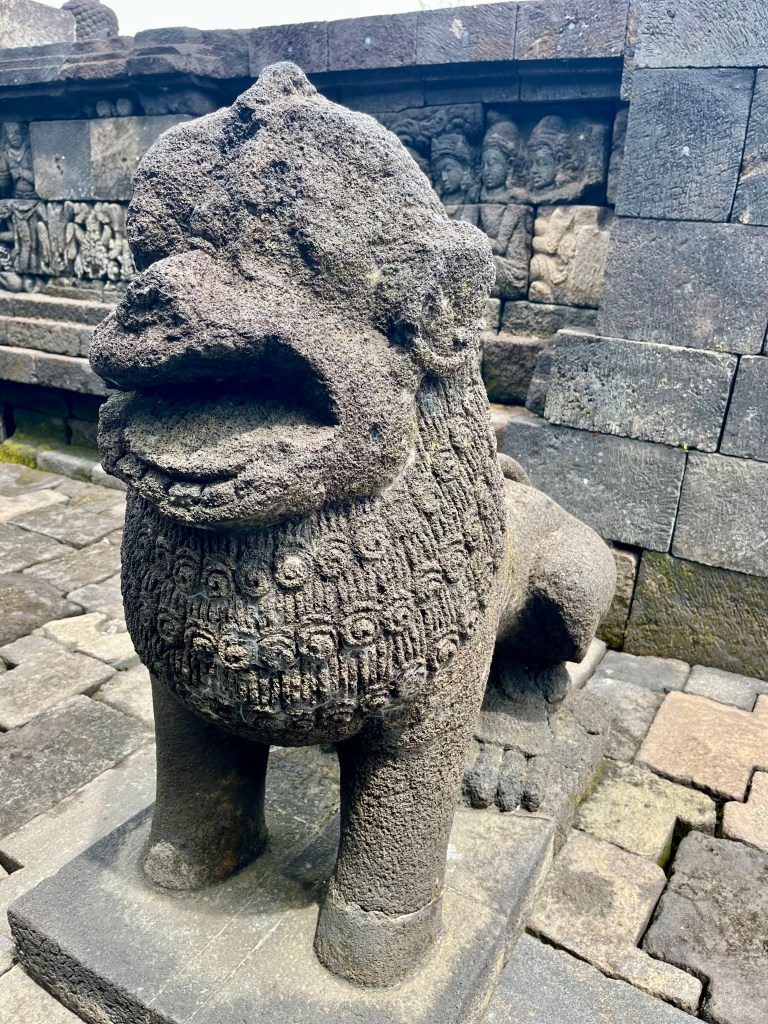
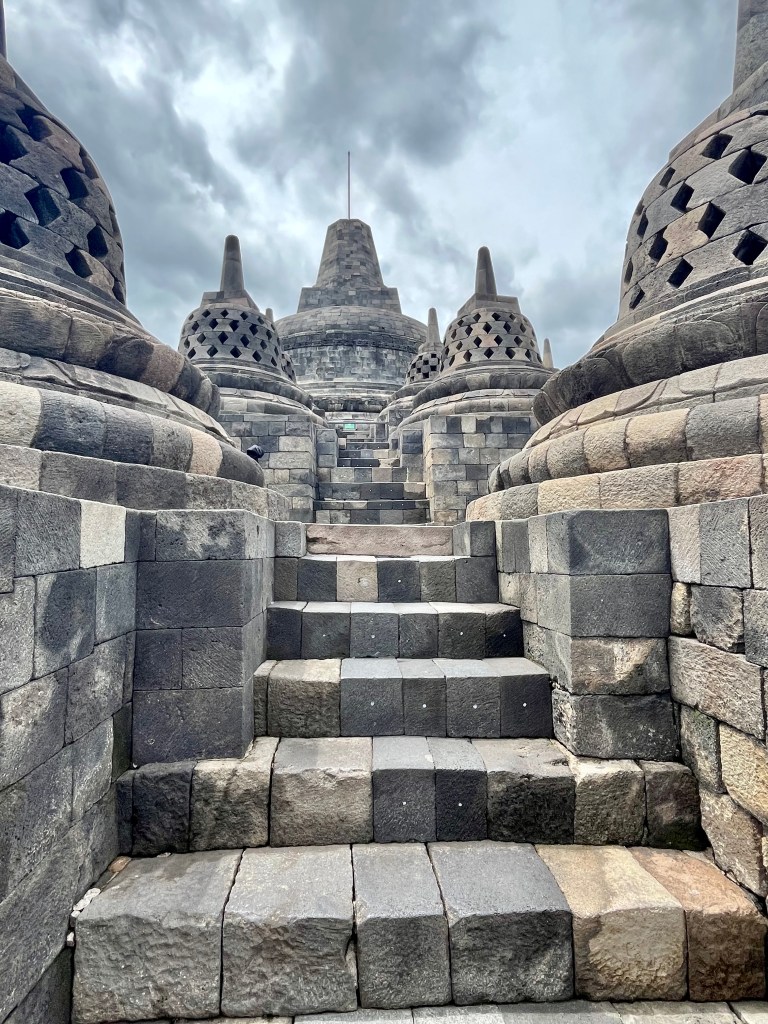
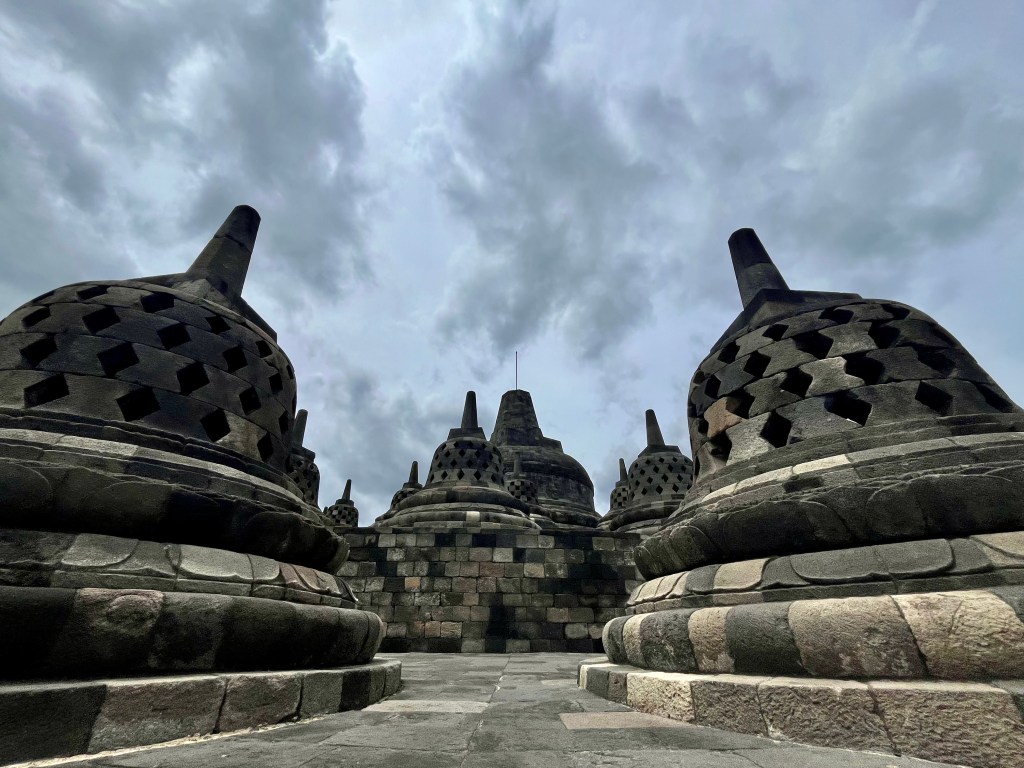

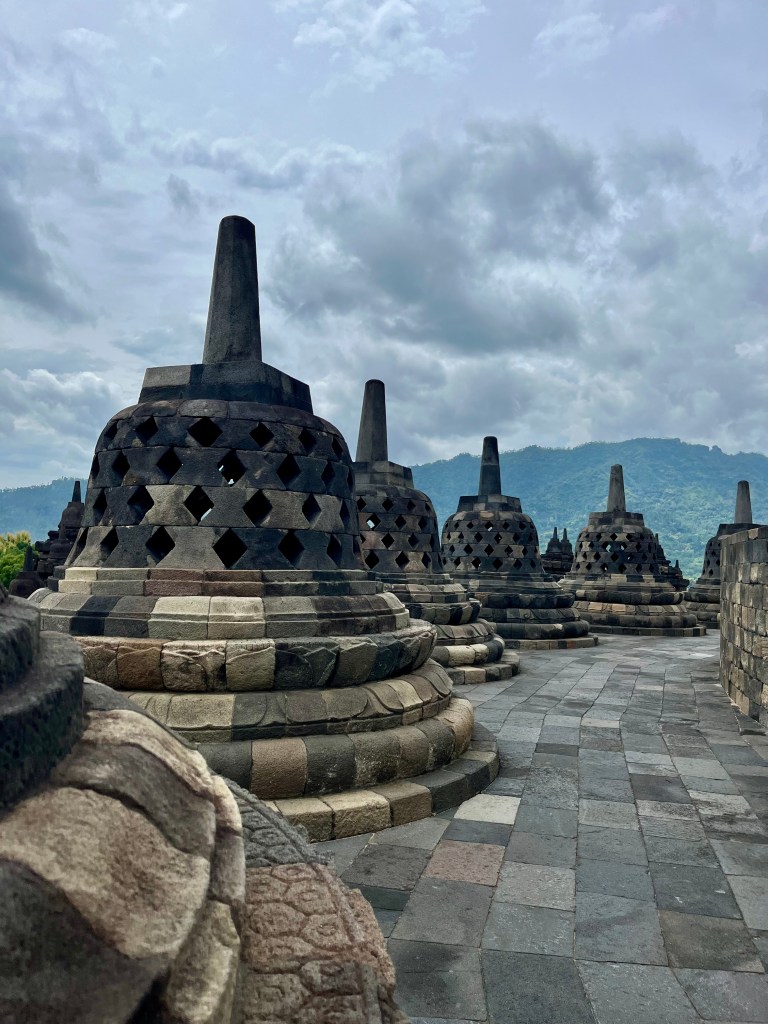
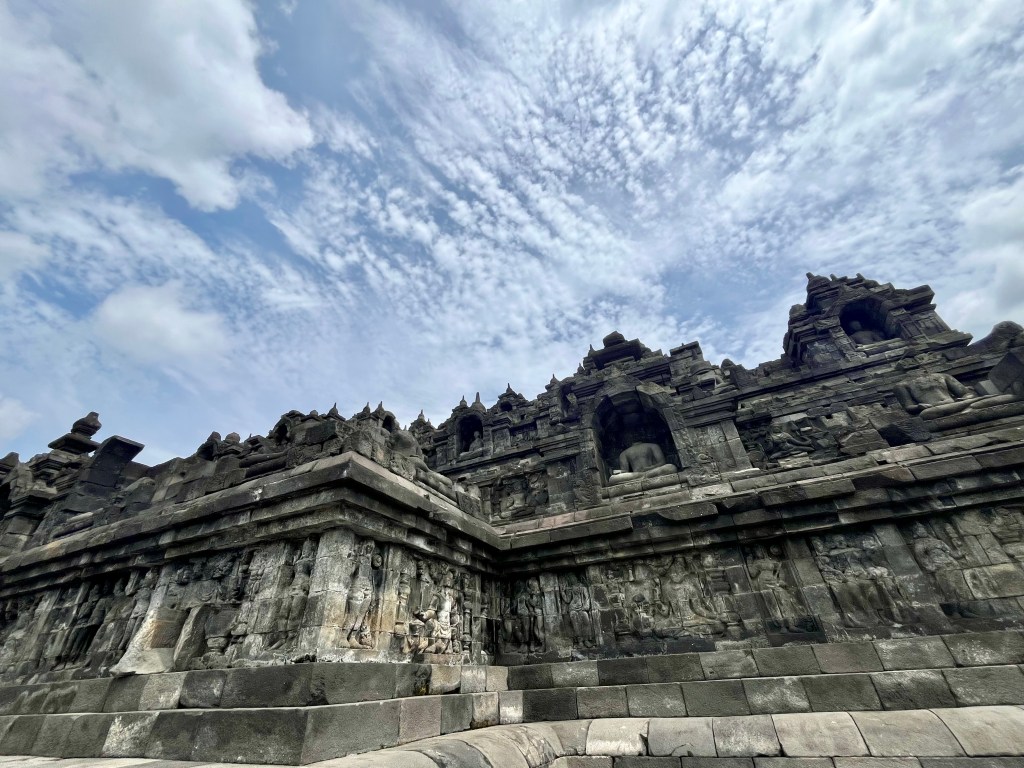
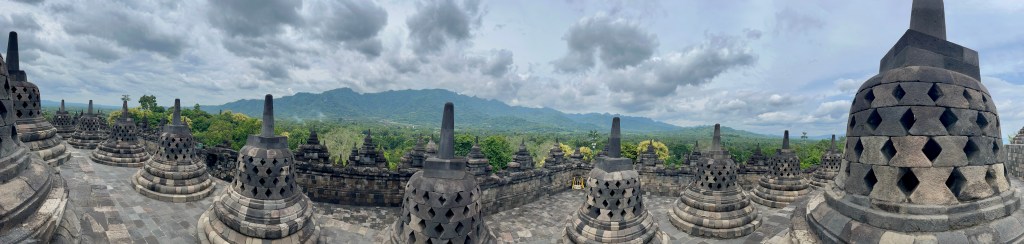
The temple is made of 9 volcanic stone platforms that is topped by a central dome. It’s decorated with over 2000 carvings and 504 Buddha statues in total. At the top, there are 72 stupas and inside each stupa is a Buddha statue. Sadly today, 247 Buddhas have lost their heads from people stealing them over the centuries. As you can imagine the temple itself is jaw dropping, but what makes it more magical is that it’s surrounded by lush green hills and the towering Merapi volcano. I could have spent hours there taking it all in but they do restrict visitors so that only a certain amount visit per day and at certain time slots. This is good for the preservation but also makes the experience more enjoyable as it’s not overcrowded by people.

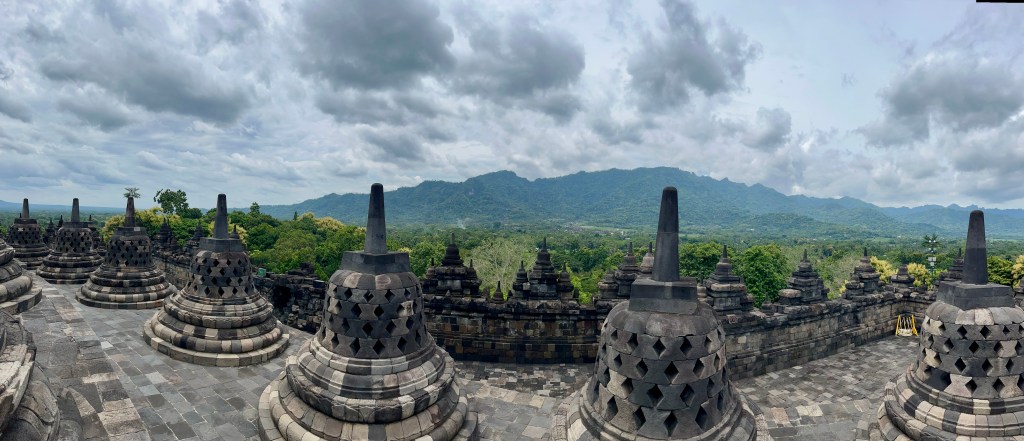
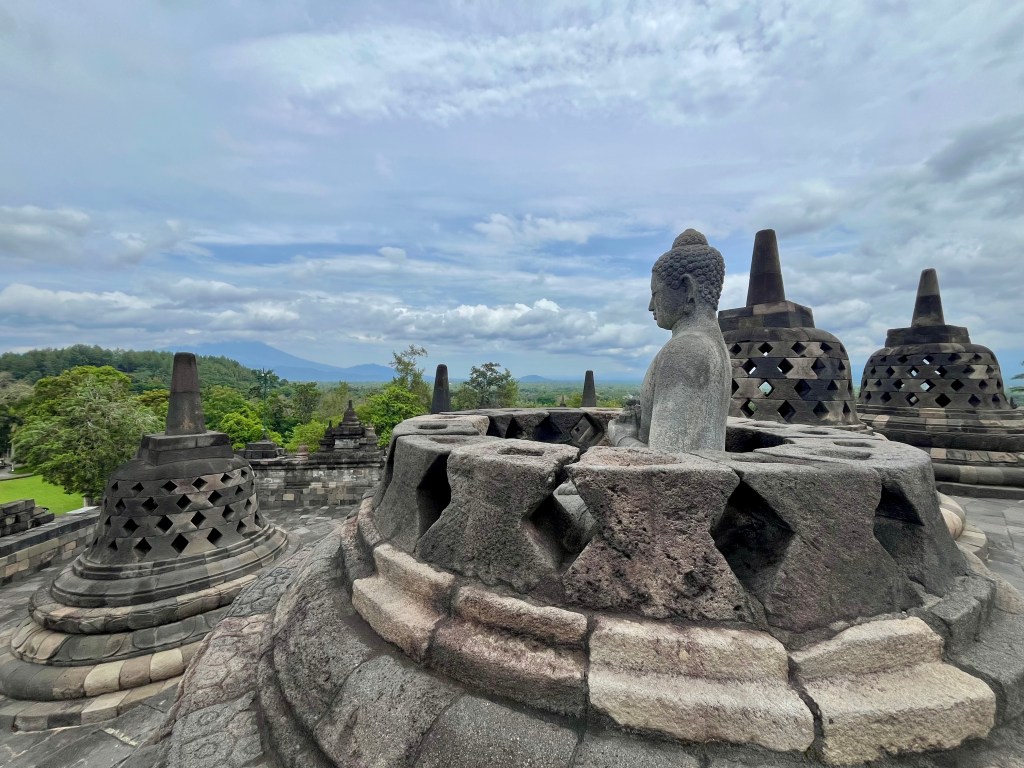


When I got home and looked into Borobudur a little more I was able to find some interesting bits of information. The temple itself reaches a height of 35m and the pattern it creates from above is that of a mandala – a geometric pattern representing a sacred space. It is often used as a tool for meditation, focusing attention and foster a sense of connection and inner peace. Mandalas are found in both Hindu and Buddhist cultures and are believed to symbolize the cyclical nature of life and the interconnectedness of all things. The monument is divided into 9 distinct platforms – the first 6 are square and the upper 3 are circular shape.
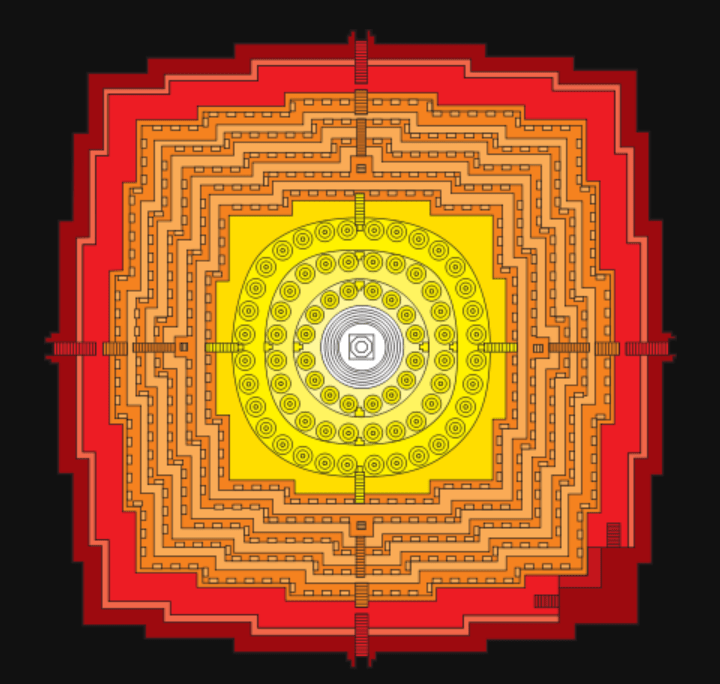
The temple is split into 3 levels or realms. The base level (level 1) represents Kamadhatu (the world of desires). Levels 2-6 represent Rupadhatu (the world of forms) and the upper 3 levels represent Arupadhatu (the formless world). Each level of the temple represents one stage of enlightenment and as pilgrims circle around the levels they are supposed to contemplate the life lessons and teachings found in the wall sculptures, guiding them on a symbolic journey through the stages of enlightenment.

 The Urban Wanderer